|
AN INVITATION
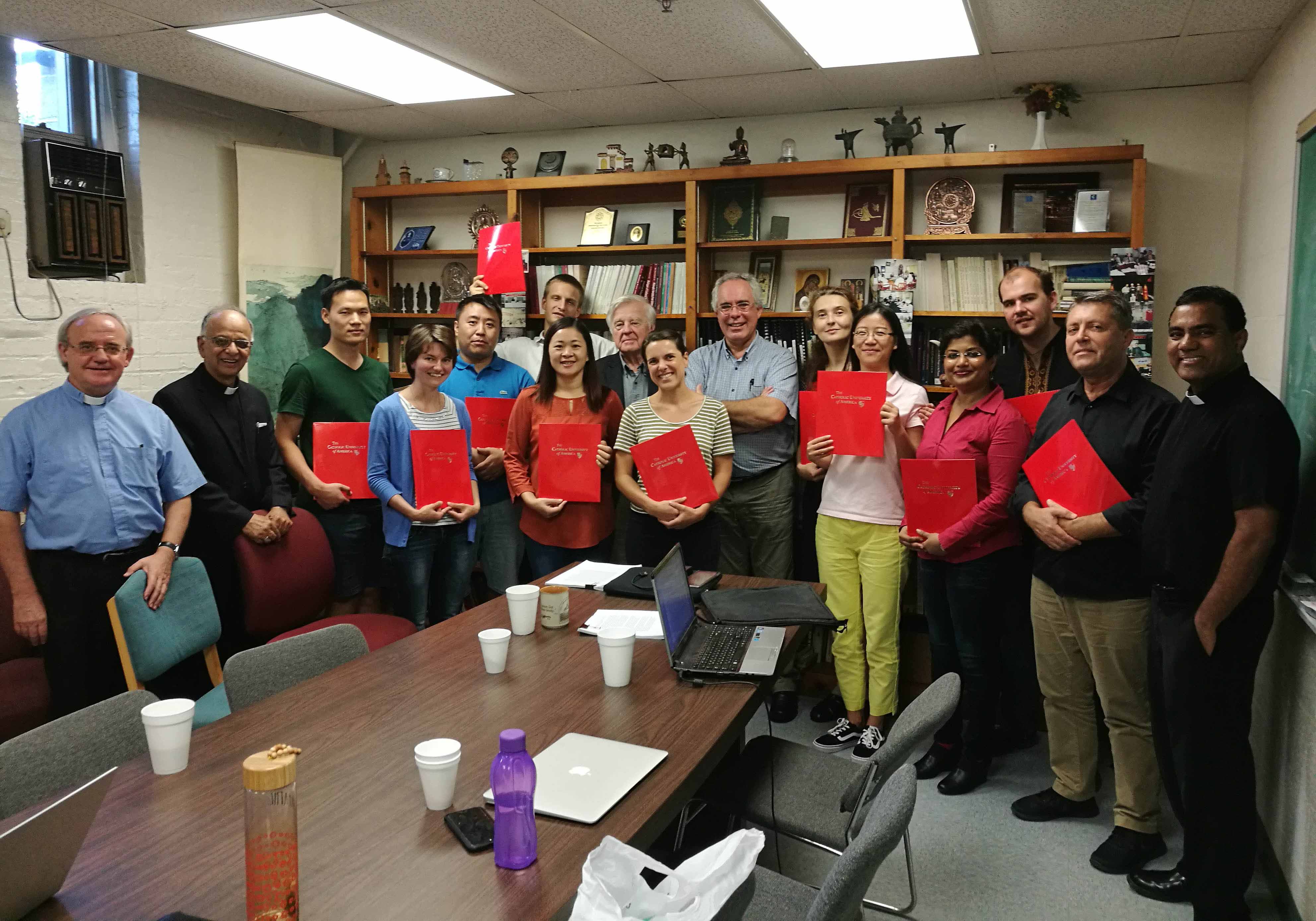
THE FALL SEMINAR
Human Identity or Nature: Stable and/or Changing?
October 11 – November 19, 2010 Washington, D.C.
Challenge
The tragedies of the last century have made the definition and justification of absolute human rights a most pressing necessity. But the task of understanding human identity or nature and its authentity or dignity which these rights are meant to defend has proven elusive, even as the need intensifies. Indeed, in some ways we may be moving ever further from achieving this task.
Hence this seminar will begin with a study of the critiques, from Ockham and Bacon to Rorty, of the notion of human nature and of the nature of the sciences which would do away with it. The very term nature, whether in its substantive or adjectival form, has changed radically over these last few centuries. Moreover, changes in meaning to the substantive form of the term necessarily bring about changes in the meaning of the adjectives that qualify it. Thus, divine and human as describing 'nature' have been drastically altered. These conceptual changes, which began in the West, are now being felt across the globe as the related epistemology of the via moderna and its sciences imposes itself.
In addition, as the focus of the present seminar will be on human nature, a third name must be brought into the discussion: Charles Darwin and his evolutionary theory. Seeing the relation between the above-mentioned metaphysical and epistemological movements on the one hand, and their subsequent influence on Darwin's biological theory on the other is imperative for understanding and addressing the changes in meanings that have taken place with respect to human nature.
By way of response, the seminar will then turn to the nature of science in order to determine the necessary but not restrictive role of sense experience and its relation to the imagination and the intellect. Nature, and hence the human essence or identity, as the proper and unchanging object of the human intellect is the metaphysical or existential basis for human dignity and hence human rights.
But therein lies our dilemma, for to the degree that human nature or identity is stable must it be said to be immutable and thereby an impediment to human progress? Or if changing, to what rights does it entitle one: when and for how long? For answers to these questions the seminar will look to the more recent groundbreaking phenomenological, existential, and hermeneutical developments, as these contribute to discovery with respect to the philosophical anthropology and ethics, aesthetics and and indeed the wisdom that is required for a worthy life in these times and beyond. ... (more)
Application for Participation
Applications for participation in this seminar should be sent by email by March 20, 2010, to cua-cscv@cua.edu and edwardjosephalam@yahoo.com include:
(1) a vita describing one’s education, professional positions and activities,
(2) a list of the applicants’ publications,
(3) a letter stating your interest and involvement in this theme and the relation of participation in this seminar to your past and future work in philosophy and related studies, and
(4) an abstract of a study(s) you might present as an integral part of the seminar.
|
The Council for Research in Values and Philosophy (RVP)
Goals
- To understand and appreciate one’s own culture and the values that shape aspirations and motivate actions.
- To understand other cultures and to develop a positive yet critical appreciation thereof.
- To build cooperation among peoples by healing deep tensions and promoting peace and cooperation on a global scale.
Objectives
- To mobilize research teams to study the nature, interpretation and development of cultures and to apply them to the challenges of contemporary change.
- To publish and distribute the results of these efforts.
- To organize extended seminars for deeper exploration of these issues and regional conferences for the coordination of this work.
|
Project on "Faith in a Secular Age" |
|
| | |